Pages

Showing posts with label FDA. Show all posts

Tuesday, June 27, 2017

Trisodium Phosphate in Food: How I Learned to Stop Worrying and Love Paint Thinner

A recent internet freak-out that may have passed under the radar for many out there concerns the presence of a potentially toxic food additive in cereal that is also found in paint thinner and cleaning agents.
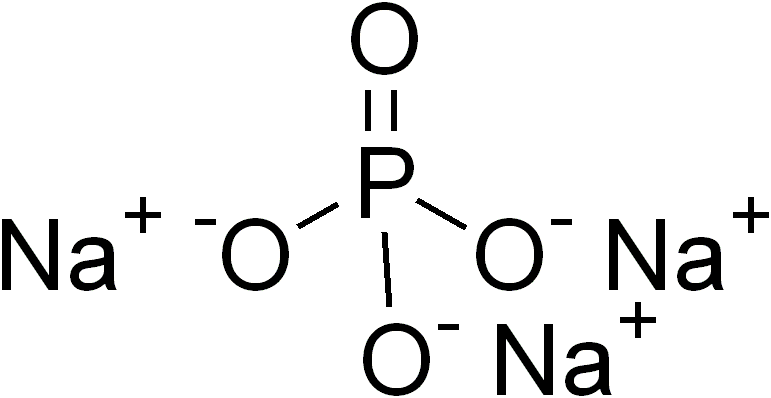
The ingredient in question is Trisodium Phosphate (TSP), a salt compound with many diverse uses including paint thinning, cleaning, other degreasing, and removing oxidized metal for soldering. Interestingly, and the source of controversy, TSP is also used as a food additive and a nutritional supplement for exercise.

While this conspiracy theory originally dates back to at least 2014, it has recently made the rounds on social media within the past month. Despite being thoroughly debunked by Snopes the meme continues. This serves as just a single example of an ongoing chemophobia – distrust of anything seen as an unnatural “chemical” – among esteemed internet dietary experts.

Much of TSP’s functionality comes from its strong basicity, as it has a pH=12 as a 1% solution. Its basic properties will promote reaction with fatty acids through saponification, breaking down grease and oil and thus serving as a cleaner and degreaser (or paint thinner). These functionalities also make it useful as a food additive, as its saponification ability is useful in cheese sauces and it can prevent acidification of food. It also prevents moisture buildup and has some antimicrobial properties. Interestingly, it is also used as an exercise enhancer, presumably due to the need for phosphates in aerobic metabolism.

While TSP use has dwindled due to phosphates being recognized as a major contributor to eutrophication (promoting algae growth in water bodies), it is “Generally Recognized As Safe” for human consumption by the US Food and Drug Administration. It can be very corrosive at high concentrations due to its basic properties, however there is no substantial evidence of long-term effects at low doses for TSP or other phosphates.

It is only natural (get it) to be concerned when a chemical involved in industrial processes appears in our food. However while in this case the food additive is in fact the active ingredient in cleaners/degreasers and not merely an unrelated component, it is the concentration and context that matter. The basicity and phosphate chemistry of TSP make it a useful compound for a diverse set of functions, however the chemical reactions necessary for those functions are restricted by the specifics of the chemical concentration, media, and form. It is often the important nuances and details that are left out of a tweet or meme.

Sunday, October 4, 2015

The 21st Century Cures Act: Is it an overall positive?

The below article is published in the Fall 2015 issue of the National Institutes of Health -NIDDK newsletter "The Informer"

In a rare showing of bipartisan collaboration, on July 10th the U.S. House of Representatives passed the 21st Century Cures Act by the substantial margin of 344-77. The 21st Century Cures Act is a large bill that is subtitled as “an act to accelerate the discovery, development, and delivery of 21st century cures, and for other purposes.” According to the U.S. House of Representatives Energy and Commerce committee where the bill was drafted, the goal of the Cures Act is to streamline the process from drug discovery to development and ultimately delivery to patients. The Act promotes scientific research on deadly diseases and attempts to reduce regulatory hurdles in bringing new drugs to market.

In an era of ever-decreasing federal research funding, the bill offers a welcome boost to the research community, allocating $8.75 billion in research funds to the NIH over 5 years and an additional $550 million to the FDA. Not all scientists are in favor of the bill, however. The Cures Act aims to expedite the regulatory approval process for drugs by the FDA. As a means to this end, the bill promotes drug approval based on less rigorous clinical trials, biomarker readouts as opposed to clinical end points, and even non-quantitative anecdotal evidence in some cases. It also further reduces the rigor and objectiveness of medical device approval, which is already more lenient than the drug approval process. In the name of accelerating innovation, the bill attempts to streamline existing bureaucratic barriers to drug development and public release. However, while the bill does contain a section dedicated to “reducing administrative burdens of researchers”, it also adds additional unnecessary bureaucracy by requiring individual review by NIH institute directors of all awarded R-series grants and creating several instances of redundancy with programs or directives already in place at the NIH.  

While there are some potentially troubling issues with this bill, it is refreshing to see Congress finally recognizing the need for additional biomedical research funding. The Senate is now debating the bill and drafting their own version, but the upcoming budget debate may define whether the Cures Act is even passed this year. Assuming the 21st Century Cures Act becomes law, it will be several years before its full effects will be known. In the meantime, it is important to continue evaluating the potential long-term outcomes of this bill for everyone affected.