The 2017 Nobel Prizes were recently awarded in early
October. Annual Nobel Prizes are awarded for achievement in Physics, Chemistry,
Physiology/Medicine, Economics, Literature, and Peace.
Sunday, November 5, 2017

Tuesday, June 27, 2017
Trisodium Phosphate in Food: How I Learned to Stop Worrying and Love Paint Thinner
A
recent internet freak-out that may have passed under the radar for many out
there concerns the presence of a potentially toxic food additive in cereal that
is also found in paint thinner and cleaning agents.
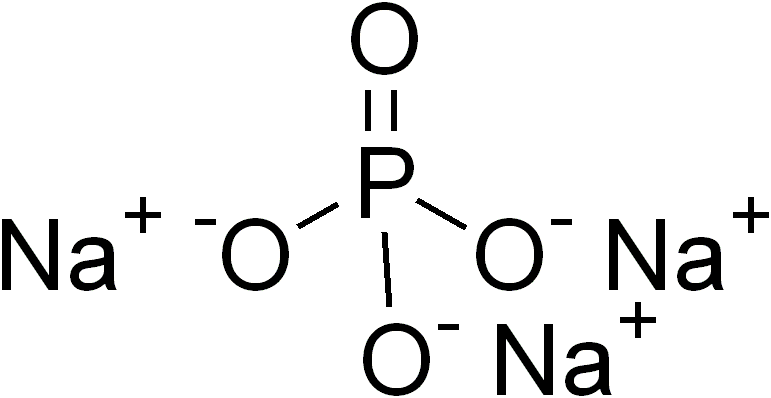
While this conspiracy theory originally dates back to at least 2014, it
has recently made the rounds on social media within the past month.
Despite being thoroughly debunked by Snopes the meme continues. This serves as
just a single example of an ongoing chemophobia – distrust of anything seen as
an unnatural “chemical” – among esteemed internet dietary experts.
Much of TSP’s functionality comes from its strong basicity,
as it has a pH=12 as a 1% solution. Its basic properties will promote reaction
with fatty acids through saponification, breaking
down grease and oil and thus serving as a cleaner and degreaser (or paint
thinner). These functionalities also make it useful as a food additive, as its
saponification ability is useful in cheese sauces and it can prevent
acidification of food. It also prevents moisture buildup and has some
antimicrobial properties. Interestingly, it is also used as an exercise enhancer,
presumably due to the need for phosphates in aerobic metabolism.
While TSP use has dwindled due to phosphates being
recognized as a major contributor to eutrophication
(promoting algae growth in water bodies), it is “Generally Recognized As Safe”
for human consumption by the US Food and Drug Administration. It can be very corrosive at high concentrations due to its
basic properties, however there is no substantial evidence of
long-term effects at low doses for TSP or other phosphates.
It is only natural (get it) to be concerned when a
chemical involved in industrial processes appears in our food. However while in
this case the food additive is in fact the active ingredient in
cleaners/degreasers and not merely an unrelated component, it is the
concentration and context that matter. The basicity and phosphate chemistry of
TSP make it a useful compound for a diverse set of functions, however the
chemical reactions necessary for those functions are restricted by the
specifics of the chemical concentration, media, and form. It is often the
important nuances and details that are left out of a tweet or meme.
Tuesday, February 21, 2017
How Effective is Hand Sanitizer?
There are a few standards that everyone keeps on them in
their bag. Moisturizer, chapstick, and a bottle of hand sanitizer. Hand
sanitizer, with Purell being the eponymous brand name, is available in many
public buildings, and some people use it following every touch of a door
handle. Purell is a watery gel that is rubbed into one’s hands as a sanitizing
agent in lieu of available soap and water. There are different types of hand
sanitizer, but the active ingredient in Purell and many common brands is simply
ethanol, which universally
kills bacteria by dissolving their cell membrane and destroying proteins.
While hand sanitizer is known to be very effective at killing
bacteria, for some people it serves as more of a security blanket in response to
any and all skin contact.
The question is, does the availability of hand
sanitizer provide a false sense of sanitation?
Wednesday, October 26, 2016
Fracking - Cracking the Code, and Passing Gas
Fracking is an industrial process for extracting
natural gas and oil from previously untapped reservoirs in solid ground. The
relative value of its benefits and drawbacks has been greatly debated among
politicians, news media, and academia. On one hand, fracking has greatly increased the domestic supply
of natural gas and oil, contributing to a global decline in prices and promoting U.S. energy
independence. Critics, however, point to evidence of serious health concerns and major pollution/contamination risks.
What is Fracking?
Hydrauling fracturing, or
“fracking”, involves the pumping of fluid at high pressure deep into wells in order to crack the rock (typically shale) open and release trapped
energy-rich natural hydrocarbons (gas and oil). Fracking wells are first
drilled vertically down and then horizontally through the target shale deposit,
followed by well encasement and subsequent pumping of fracking fluid. Fracking
fluid is primarily water, but also includes supportive chemicals as well as proppant.
Proppant can be either sand or tiny ceramic balls that fill the cracked rock
and help keep the fissures open for extraction of gas/oil. Once the pressure is
turned off, the released gas/oil along with other minerals travel up the well
and are extracted.
A short video explaining the process of fracking
Wednesday, July 6, 2016
How to Edit Genes (Using CRISPR)
Check out my summary of CRISPR, the molecular biology
technique currently revolutionizing genetic engineering:
I wrote this article as a guest column for the blog
Infective Perspective. Please check out other posts there as well!
Tuesday, May 3, 2016
Obama's "Moonshot" to Cure Cancer: Apollo 11, or Apollo 13?
During his final State of the Union address in January 2016, President Obama announced a plan to invest $1 billion toward a “moonshot” attempt at curing cancer. While the details of the plan are rather broad and ambiguous, it essentially provides increased funding for existing research efforts with an emphasis on data sharing and collaboration. While the biomedical research community will gladly welcome any funding increase amidst an ever-decreasing public investment in research relative to inflation, not all scientists are rushing to praise this initiative.
The moonshot initiative includes a substantial funding increase for cancer research at both the National Institutes of Health (NIH) and the Food and Drug Administration (FDA) along with additional support for efforts at the Department of Defense and Veterans Affairs. Research areas of interest highlighted by the initiative are: vaccine development, earlier cancer screening/detection, immunotherapy, pediatric cancers, and genomics. As previously mentioned, another big focus is to consolidate various efforts not only among government agencies but also between distinct cancer researchers and labs. An overall summary of the plan’s goals can be found here.
Thursday, April 14, 2016
Zika: Current Knowledge and New Directions
Check out the Zika post I wrote for the "Science Policy For All" blog! It summarizes the Zika outbreak, including new updates:
https://sciencepolicyforall.wordpress.com/2016/04/14/zika-update-current-knowledge-and-new-directions/
Subscribe to:
Posts (Atom)